
Where is the Happy in an open ended story?
Using storytelling approaches to analyse ethics in exercise settings.
Andrew Clarkson and Gayle Letherby
2/1/202620 min read
Where Is the Happy in an Open-Ended Story?
“The truly unique trait of Sapiens is our ability to create and believe fiction. All other animals use their communication system to describe reality.” - Yuval Noah Harari
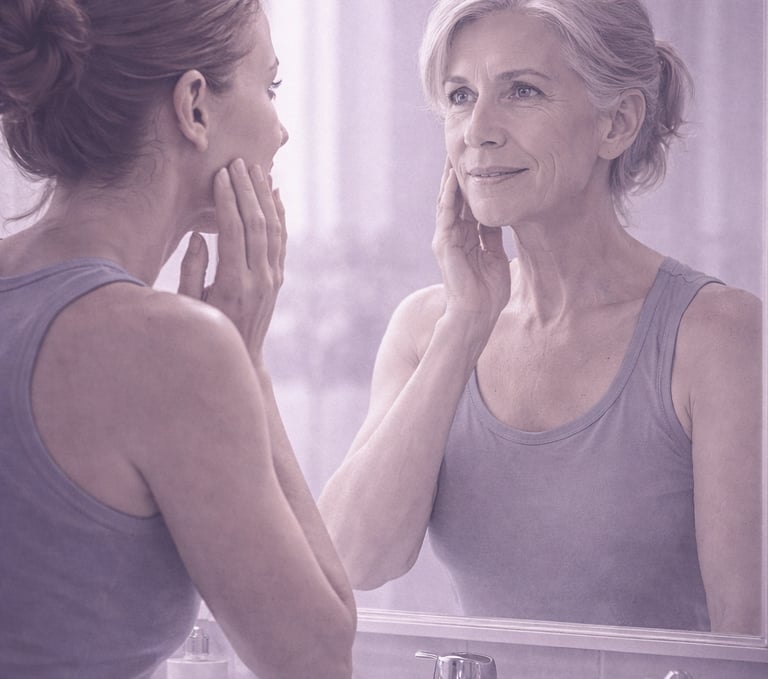
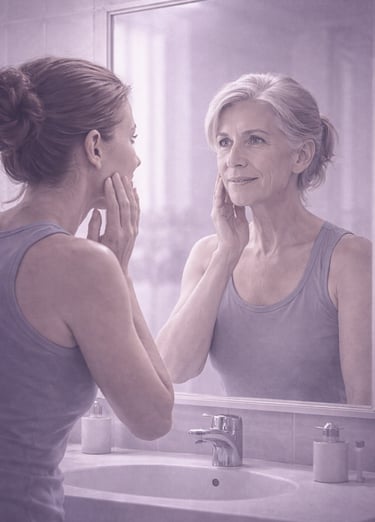
All this suggests ‘responsibility’ (Seligman, 2011; Kite and Kite, 2021) and the desire and ambition for a new self is perhaps even more pressing in an era of late modernity in whichindividuals are encouraged to treat their lives as ongoing self‑projects, constantly working toward better, improved versions of themselves (Giddens, 1991) and wherein happiness and emotional fulfillment is commodified and linked to personal effort and lifestyle change (Illouz, 2007). But, the likelihood is that most of us, are ‘doomed to make the same mistakes’ we always have, to return to old habits and behaviours, not least because of there is comfort in the familiar (Roordink et al., 2023). Change is not a linear ascent but a continual negotiation between intention, habit, biology, and life conditions and circumstance. Hormones, embodied experience, past learning and the pressures of everyday life all pull us in competing directions, making sustained change something that requires ongoing attention rather than a moment of decisive action. Identity is constructed through evolving personal narratives, influenced by external expectation and relationships with others. Our bodies function as ‘both a barrier to and a response for wellbeing’ (Gibbons, 2021:121). The project is never finished and constantly rewritten as circumstances change (McAdams, 2001; Shilling, 2012).
So, if our lives are open-ended stories, why do we insist on measuring them as if they were closed?
Before-and-After Photography: A Momentary Record
Progress is motivating. Looking back at where we began can validate struggle and encourage further effort, fueled by the possibility of ‘what if?’ Because of this, tracking change has become central to goal-setting practices, particularly within personal training. SMART (Specific, Measurable, Achievable, Relevant, Time-Bound) goals formalise this, with measurability offering both motivation for the client and evidence of value for the trainer. Before-and-after photography is one such method, in which two images, separated by time, promise visual proof of transformation. The client can see their progress, and the image becomes both a record and a reward. However, such images are problematic.
Before-and-after photographs capture only a moment or two; snapshots in time. They document a specific period of motivation, discipline, and circumstance, but rarely represent a sustainable or enduring state. The person in ‘Photo B’ exists briefly, under a particular set of conditions. Perhaps they had more time available, greater access to resources, more energy, or emotional stability than they had before or will have again. Injury, illness, work demands, family commitments, sudden or ongoing trauma may later alter what is possible, often through no fault of the individual’s own. Yet we implicitly assign moral value to these images. ‘Person B’ carries greater aesthetic and fitness capital (e.g. Smith Maguire, 2021; Kite and Kite, 2021) and is framed as an improvement on ‘Person A’. This is troubling for two reasons. First, it elevates a transient state as an ideal against which future selves will be judged. Second, the image itself is reductive, offering only a two-dimensional snapshot that tells us nothing about stress levels, burnout, enjoyment, or overall wellbeing (Goffman, 1959; Bordo,1993; Crossley, 2001; Gill, 2007; Shilling, 2012). A person may look what they, and others, perceive as ‘better’while actually feeling worse, and yet that experience is erased by the image and likely not retained accurately in memory. What may remain instead is unconscious embodiedtrauma, shaping future struggles with motivation and goal-setting, not to mention physical and emotional wellbeing.
When bodies inevitably fluctuate, the comparison between A, B, and an unknown future C can become a source of shame rather than motivation. This effect is intensified when images are shared publicly, especially online, where context collapses and comparison multiplies (Cohen et al., 2015; Lewallen and Behm-Morawitz, 2016).This does not mean that before-and-after photography is inherently unethical. For some moving deliberately from A to B is the explicit aim. A clearly communicated mission statement by a trainer in agreement with the client which cultivates a supportive and motivating environment is often thought to be the main role of a PT. But real ‘duty of care’ requires acknowledging that health exists within and across a lifespan, not just within a programme. At the very least, this means contextualising images, valuing both the starting point and the journey, and recognising that which lies outside of the frame.
The ’virtues’ of individualism and personal responsibility are prevalent in discussions of health and fitness. Fitness industry promotional literature and UK governmental policy documents generally suggest that physical activity has only positive consequences; promising physical and mental good health and aesthetic benefits (Carless and Douglas,2010; Andrews and Silk, 2012, Fullagar et al., 2021). This is based on a narrowly defined definition of what it is to be ‘healthy’ leading to blame and shame for those whose bodies and motivations do not ‘fit’ and an over-focus on the performance narrative (i.e. winning is all) ignoring alternative stories that suggest broader and multi-dimensional motivations and experiences focusing on self-discovery, embodied learning, sensorial experience and relational interdependence (e.g. see Carless and Douglas, 2010; Sparkes, 2017; and Allen-Collinson et al., 2025).
Arthur Frank (1995) argues that the culturally preferred image of a body is one that is functional, productive, visually ‘normal’ and free of suffering. This ‘ideal’ he suggests shapes how people judge themselves and imagine a ‘better’, more valued, future self. We look to others, including healthcare providers and fitness professionals and the media (including social media) when making aesthetic judgements about our own bodies. One dimensional, simplistic, often unobtainable, representations of what fit and healthy lookslike are potentially harmful if left unchallenged. Such images are rarely realistic as most probably show only a moment in the model’s yearly calendar, are likely posted in the best light and angle, and may be manipulated to enhance particular ‘qualities’. The trainer (and the health professional) whose daily work centres on ‘improving’ bodies, is not immune to dominant messaging, and must actively interrogate their own assumptions so as not to reproduce ideal‑body rhetoric or perpetuate a one‑size‑fits‑all approach.
Writing of his own experience of illness and recovery, Frank (1995) identifies three major storytelling narratives – the restitution narrative, the chaos narrative, and the quest narrative - through which people make sense of bodily disruption. The restitution narrativewhich suggests that simply doing X will result in Y is flawed. Such a reductionist message may appear motivational and supportive but does not align with an ethical approach nor recognise an open-ended life story. The chaos narrative, which suggests lack of resolution and consistent challenge leaves the sufferer in a purgatory state. Imagine the pain of being sold a story that one’s hard work will lead to positive transformation and all one’s efforts come to nothing. Whose fault is this; the health or fitness professional or the patient or client? With reference to exercise and fitness, is it a failure to identify realistic goals and how does the new year’s resolution, yo-yo dieting, the fad of the season, or the training / injury cycle which can result from the ‘short term pain for long term gain’ mantrafit here?
We should set goals to improve our health and aesthetics do play a part in our sense of self. Related to this our emotional and physical wellbeing and positive sense of self is sustained when we successfully perform identities that are socially recognised and rewarded by others (Mead 1934, Goffman 1959, Deci and Ryan 2000). Gender is significant here. As Judith Butler (1990) points out gender is not something we are but something we do, it is a not an inner essence or a natural truth, it is not fixed or stable but rather produced through repeated behaviours, acts, gestures and so on, in line with societal norms and expectations.
Traditionally the fitness industry relied on cultural norms that privileged certain body types, behaviours, and identities; often aligning with hegemonic masculinity (strength) and idealised femininity (appearance) (Smith Maguire, 2001; Carless and Douglas, 2010; Sparkes, 2017; Fullagar, 2021). This in turn reflected, and reflects, wider cultural expectation. There are differences in our bodies that need to be recognised. For example men typically have higher absolute lean mass and strength, while women often show comparable or greater relative strength gains when programmes are matched. Further, reviews on sex-based training and nutrition highlight differences in muscle mass, hormones, and recovery patterns that can shape programme design (Lopez and Fernández-Elías, 2024). Often though cultural ‘preferences’ rather than physiological differences determine attitudes and experience. In 2022 Benjamin Daley and colleagues asked male and female respondents to view, and rate for ‘attractiveness’, 240+computer- generated bodies whose levels of muscle and adipose fat tissue were varied. The ideal male body was perceived to be high muscle and low adipose, and the ideal female body to be toned and low adipose (not extremely muscular, but visibly lean)showing that ‘leanness’ has become a shared requirement for attractiveness in all genders, but ‘muscle mass’ remains more highly valued in men. Relatedly, Roan Louwand colleagues (2025) suggest that the historical women = thin and men = muscular expectation has merged into a newer, more demanding standard. The ‘Fit Ideal’ as they term it constitutes:
• low body fat
• visible muscle definition
• high discipline and self-monitoring, and
• a performanceoriented lifestyle
This ‘ideal’ Louw et al. (2025) found applies to all genders, but is internalised differently. From a study group of 288 Australians they found that a tendency towards compulsive exercise and muscularity (i.e. high protein) diets appeared in both men and women. Women, however, reported greater appearance comparison, body dissatisfaction and social media pressure. Louw et al., (2025) highlight social media as a major driver citing fitness influencers, filters and curated ‘progress’ (before-and-after) photos as significant to everyone’s ‘fit ideal’ internalisation but note that the emotional burden is heavier for women. Yet, it is important to resist other gender stereotypes, for it is not just the ‘male gaze’ that is significant as women judge other women and men are not immune from online abuse and critical ‘gym talk’. Age is relevant too with increasing numbers of young men reporting being influenced by online messages of how they should look and behave (better.org.uk).
Cultural ideologies shape the expectations clients bring into training spaces and can influence how PTs respond. Further, attending to gendered bodily differences whilst simultaneously resisting old and newer harmful stereotypes can be hard. Clients mightrequest a programme based on culturally promoted bodily ideals which may need to be challenged. Yet at the same time it is not the PTs role to counter a client’s views merelybecause they contrast with their own. Public health messaging that does not glamorise extreme fitness or discipline, promoting the ‘fit ideal’ above all else, would benefit both the person and the professional (for a similar argument see Louw et al., 2025).
A nuanced approach to stories around health and fitness, rather than one that relies on transformation, supported by stereotypical ‘ideals’, would help shift the narrative andhopefully lead to pride and happiness replacing shame and stigma. This requiresprofessionals, supported by industry and government messages, to give more consideration to a person’s whole life, to an open-ended lifecourse, rather than pursuing or supporting a quick fix agenda. This aligns closely with Frank’s (1995) third narrative, the ‘quest narrative’, which emphasises the ongoing journey rather than immediate results. The quest narrative acknowledges the hard work, the struggle, and setbacks inherent in change as well as the moments of progress. It enables people to grow, to feel positive about their efforts, and to avoid being crushed by unrealistic expectations.
Now, as a new era of an augmented self emerges; defined through data, optimisation, and productivity, it becomes even more important to focus on what truly matters to us and what we value in our own life stories. Only then can we resist reductive narratives and cultivate practices that honour complexity, humanity, and lived experience.
Datafication of Health: Recording the Ebbs and Flows
Modern technology has expanded our ability to scrutinise health in unprecedented detail. Fitness trackers, diagnostic devices, and biological testing offer ever expanding precision, while AI systems interpret these metrics and offer rigorous recommendations for behaviour changes. Both clients and trainers increasingly rely on data to guide decisions and demonstrate impact. The fitness industry also relies on such data to inform policy change, to justify spending or attract funding. (For more here see Shin et al., 2019’Larango et al., 2021; Narain and Lally, 2025). Yet, despite the clear benefits such technology offers where data can personalise programmes, highlight trends, and support evidence-based practice, many of the same problematic issues present in ‘before-and-after’ photography apply here too.
Health technologies increasingly quantify the body in unprecedented detail. Metrics such as heart‑rate variability, sleep scores, blood pressure, and body composition are now tracked continuously through wearables, diagnostic devices, and biological testing. These systems generate large volumes of physiological data yet often present it without narrative or experiential context; without real meaning. Where does stress, pressure, satisfaction, pleasure, pride, appear in the data? These remain largely invisible within the numerical outputs that claim to represent holistic wellbeing. As a tool for tracking, wearables and/or diagnostics machines are elevating human’s abilities both in performance and efficiency. However, they are limited in their ability to account for lived experience and may even undermine wellbeing when used as stand‑alone indicators of health (Shin et al., 2019; Fullagar, 2021). Research shows that such metrics fluctuate in response to stress, relationships, emotional states, and daily life pressures, but these influences are rarely captured in the data itself (Lupton, 2016). As a Personal Trainer Andrew (first author) rarely sees clients meaningfully change their behaviour based on tracker data alone. Rather he witnesses anxiety about poor sleep scores, guilt over missed targets, and obsession over normal physiological variation. His experience aligns with research showing that self‑tracking can provoke stress, guilt, and obsessive monitoring when users interpret data as a negative evaluation of their discipline or self‑control (Kristensen et al., 2020).
Michel Foucault’s (1988) concept of biopower is useful here. Foucault describes how modern societies govern individuals not through force but through subtle mechanisms that encourage people to regulate themselves. Wearables function as disciplinary technologies, prompting users to monitor, compare, and correct their behaviouraccording to normative ideals of health and productivity (Foucault, 1977). By internalisingthese norms, individuals become both the subject and the object of surveillance, engaging in what Foucault calls technologies of the self; shaping their bodies and behavious to align with socially valued standards (Foucault, 1988). Data then becomes a mechanism by which people police themselves rather than a guide toward increased wellbeing. Deviation from the ideal is experienced as personal failure and self-surveillanceleads to anxiety at the expense of a positive embodied experience (e.g. Sanders, 2017; Fullagar, 2021).
All of this underscores the long-held view amongst sociologists (and others) that data is not neutral, and numbers do not just/even measure reality, they change what we value. When something is quantified, it gains authority, even if it only represents a part of the story (Espeland and Stevens, 2008; Letherby et al., 2013). Consider a person undertaking a programme to improve their cardiovascular fitness with an aim to enable them to return to work. After a period of success they indeed find themselves back at work but have less time available to train. Now the data may indicate that they are going backwards with, for example, a regression in cardio output. However, their health and sense of self may be greatly improved. What is missing is both personal context (their goals have shifted, their life circumstances have changed) and social context (returning to work may be a major marker of wellbeing). Despite this, high value is placed on physical metrics, even though such data cannot account for natural fluctuations, changing priorities and circumstances, or the holistic nature of physiological and emotional health.
At its 2025 conference CIMSPA (Chartered Institute for the Management of Sport and Physical Activity) encouraged industry leaders and fitness professionals to collect data to showcase the impact the industry has on society, especially with reference to health and welfare. Delegates were informed that public funds are rightly reserved for those more in need; those less active, more disadvantaged, both physically and economically. Yet, although ‘exercise as prescription’ has been recognised within the context of health and in welfare economics for more than a decade its use by GPs remains limited (O’Regan et al 2021). Furthermore, although ‘workforce readiness’, alongside a continuing focus on exercise as longevity medicine, are key fitness industry concerns, there is still little attention given to the significance of all this in terms of the development of holistic curricula (in both higher education and vocational courses for those who plan careers in the fitness industry). Furthermore, dominated at it is by physical science, such curricula gives much less attention to lifestories in context than they should.
The Contextual Story: Trends, Norms, and ‘Neoliberal Health’
No story unfolds in isolation. Our understanding of health and fitness is shaped by cultural norms, media discourse, and economic incentives. The media’s obsession with selling health advice is nothing new and this is further exacerbated in online forums. Social media has become a dominant, and largely unregulated, source of health information; set up to favour engagement encouraged significantly by controversy (e.g. Lee, 2025; Wang et al 2025). Authority and qualification is often blurred, science is misrepresented or ignored in favour of opinion, and financial motivation often sits just beneath the surface. In such an environment, individuals are left navigating conflicting advice, tribal ideologies, and moralising health messages. This creates a paradoxical landscape; full of information, some of which is not as authentic as it claims to be(Lupton, 2016; Abidin, 2016). We are thinking, amongst other things here, of ‘fake’ AI generated before-and-after photographs; a transformation that takes two minutes or less to achieve. Moreover, like data, algorithms are not neutral. They embed assumptions about what outcomes matter, often prioritising optimisation over human values (Mittelstadt et al., 2016). Perhaps nowhere else is there as much pressure ‘to live one’s best life’ just by doing this, consuming that…. So highly subjective, often untested views, around health and fitness are amplified, again with no reference to variation, context, socio-economic differences, leaving those looking for advice and guidance struggling to manage confusing and contradictory information.
Stereotypes of health and fitness have always existed; often gendered, often interwoven with other statuses, and always changing, adapting to keep both the attention economyand capitalism afloat (Davenport and Beck, 2001; Illouz, 2007; Smith Maguire, 2008; Dworkin and Wachs, 2009). What is unique is our access to information, the volume ofcontributing voices, and the lack of accountability due to account opaqueness and information crossing borders circumnavigating inter/national regulations.
There are of course challenges to the noise and there is a healthy dose of accounts that offer peer reviewed scientific data, represent good ethics, and push back against misinformation and harmful advice. Yet, as we become ever saturated with informationand advertisements the voices of educated and ally-aligned influencers get drowned out.This is further complicated by the increase in AI generated and automated content itself trained and situated in broader systems of power, culture, and economics. AI reflects what it perceives as dominant societal values rather than transcending them (Crawford, 2021).
Constructing a ‘healthy’ sense of identity has never been more complex, not least because trying to identify authentic voices is more difficult than ever. Across each lifecourse there is a need to consistently re-examine, reevaluate and reassess ones view of what being healthy means. Trying to move past long-held stereotypes; about age, gender, dis/ability and more, is hard enough, without having to deal with algorithms motivated by financial gain and attention grabbing.
Professionals are not always aligned with altruistic motivations either. When studying to
become a fitness trainer, especially a Personal Trainer, the curriculum has a heavy weighting on business acumen. Most PTs are self-employed and so in order to be ‘workforce ready’ they need skills in business. As we have noted, under neoliberalism health and fitness is commodified and PTs sell lifestyles as well as exercise. The upselling of more sessions, supplements and lifestyle products aligns with the discourses of self-investment and personal responsibility and the client as a forever ‘unfinished product’. All of which plays into the performance narrative and the notion of the ‘fit ideal’ that already leaves many of us feeling bodily insecure and unhappy. The potential danger here is that the choices that a PT makes are driven by profit margins rather than (ethical) decision making tailored to client needs and careful practice. This is not to say that this is what drives all, or even most, Personal Trainers, but there is an obvious tension between running a financially successful business - which will likely benefit from adverts and ‘healthies’ showing A-to-B transformations, product placement and a ‘you can do better if your work more and harder’ sales pitch - and an ethical practice based on realistic achievements and individual needs.
A Way Forward….
Daniel Kahneman (2011) notes that humans are poor interpreters of data and are highly susceptible to bias, especially when information is emotionally charged, which of course information and advice related to health and fitness is. Furthermore, as Eva Illouz (2007) suggests, within capitalist societies emotions are turned into commodities; gyms sell confidence, supplements sell energy, fitness influencers sell empowerment. For Illouz ‘the emotional promise’ of the ‘ideal’, rather than the product, becomes the real commodity. How ironic that although we are promised happiness as part of increased wellness, the focus on optimisation and culturally defined perfection, with no attention given to the complex, messy stories of life, often makes us less, not more happy.
Add to this the pressures on fitness professionals to provide a service, itself influenced by dominant cultural messages, which in turn influence client expectations, whilst maintaining their own personal and professional positive sense of self. Also remember that PTs and other fitness professionals have material needs too.
With all this in mind we have to ask; is true ethical practice possible?
We suggest that with more attention given to the whole story, to the everyday lives of those who strive for a healthier, fitter, happier, self, it is. The relationships between
fitness professionals and clients are in all ways auto/biographical (see Letherby, 2022 for more on sociological auto/biography) in that they are relational, and shaped by power, emotion and the embodied stories of all involved. In listening carefully to the stories clients tell the fitness professional not only has insight into any one client’s particular needs, they are also provided with information that enables them to challenge external and potentially harmful messages and provide encouragement without alienating or belittling personal values and goals. As Frank (1995:25) so nicely puts it: Listening is not passive; it is an ethical act that acknowledges the teller’s experience as real and meaningful.
This holistic, integrated approach which values the qualitative as well as the quantitative, brings the sociological, alongside the biomechanical, the physiological and the psychological, into everyday (ethical) practice, and foregrounds both storytelling and listening, not only benefits the client but also the trainer. Such an approach that focuses on the journey rather than a quick fix, that accepts, and accommodates, setbacks, thatadapts to individual changing circumstances and events, is likely to lead to longer, more positive, lasting engagement and happiness.
References
Allen-Collinson, J. Lebreton, F. and Hockey, J. (2025) ‘Slow learners: Body pedagogics and learning slow ways in sport and physical cultures’ International Review for the Sociology of Sporthttps://doi.org/10.1177/10126902251360839
Andrews, D.L. and Silk, M.L. (eds.) (2012) Sport and Neoliberalism: Politics, Consumption, and Culture Pennsylvania: Temple University Press.
Better (undated) ‘Men’s Mental Health and the impact of Social Media Pressures’ Men's Mental Health and impact of Social Media Pressures | Better
Bordo, S. (1993) Unbearable Weight: Feminism, Western Culture, and the Body California University of California Press.
Butler, J. (1990) Gender Trouble: feminism and the subversion of identity London and New York: Routledge.
Carless, D. and Douglas, K. (2010) Sport and Physical Activity for Mental Health London: Wiley, Blackwell Publishing.
Cohen, R. Blaszczynski, A. (2015) Comparative effects of Facebook and conventional media on body image dissatisfaction’ Journal of Eating Disorders 3 Article 23 https://doi.org/10.1186/s40337-015-0061-3
Crawford, K. (2021) Atlas of AI: Power, Politics, and the Planetary Costs of Artificial Intelligence New Haven: Yale University Press.
Crossley, N. (2001) The Social Body: Habit, Identity and Desire London: Sage.
Daley, B.J. Cornelissen, P.L. Maalin, N. Mohamed, S. Kramer, R.S.S. McCarty, K. and Tovée, M.J. (2022) ‘The degree to which the cultural ideal is internalized predicts judgments of male and female physical attractiveness’ Frontiers in Psychology 13 Article 980277. https://doi.org/10.3389/fpsyg.2022.980277
Davenport, T.H. and Beck, J.C. (2001) The Attention Economy: Understanding the New Currency of Business Boston, Massachusetts: Harvard Business School Press
Deci, E.L. and Ryan, R.M. (2000) ‘Self‑determination theory and the facilitation of intrinsic motivation, social development, and well‑being’ American Psychologist 55(1): 68–78.
Dworkin, S.L. and Wachs, F.L. (2009) Body Panic: gender, health, and the selling of fitness New York: NYU Press.
Espeland, W.N. and Stevens, M.L. (2008) ‘A Sociology of Quantification’ European Journal of Sociology 49(3): 401–436.
Foucault, M. (1977) Discipline and Punish: the birth of the prison London: Vintage Books.
Foucault, M. (1988) ‘Technologies of the self’ in Martin, L.H. Gutman, H. and Hutton, P.H. (eds.) Technologies of the Self: A Seminar with Michel Foucault Massachusetts: University of Massachusetts Press (pp. 16–49).
Frank, A. (1995) The Wounded Storyteller: The wounded storyteller: body, illness, and ethics California: University of Chicago Press.
Fullagar, S. Pavlidis, A. and Francombe‑Webb, J. (2021) Digital Wellness, Feminisms and the Politics of Self‑Care London: Routledge.
Gibbons, R. (2021) ‘Considering the Body in Happiness Research’ in Cieslik, M. (ed.) Researching Happiness: qualitative, biographical and critical perspectives Bristol: Bristol University Press.
Giddens, A. (1991) Modernity and Self‑Identity: Self and Society in the Late Modern Age London: Polity.
Gill, R. (2007) ‘Postfeminist media culture: Elements of a sensibility’ European Journal of Cultural Studies10(2): 147–166.
Goffman, E. (1959) The Presentation of Self in Everyday Life New York: Anchor Books.
Harari, Y.N. (2014) Sapiens: A Brief History of Humankind London: Harvill Secker.
Illouz, E. (2007) Cold Intimacies: The Making of Emotional Capitalism London: Polity.
Kahneman, D. (2011) Thinking, Fast and Slow New York, NY: Farrar, Straus and Giroux.
Kite, L. and Kite, L. (2021) More Than a Body: Your Body Is an Instrument, Not an Ornament New York: Houghton Mifflin Harcourt.
Kristensen, D.B. Ruckenstein, M. and Frith, J. (2020) ‘Self‑tracking and the moralisation of health’ Health 24(4): 345–361.
Larango, L. Ding, D. Heleno, B. Pereira, A. Bragazzi, N.L. Mansour, K.B. and Abraha, I. (2021) ‘Do smartphone applications and activity trackers increase physical activity in adults?’ British Journal of Sports Medicine 55(8): 422–432.
Lee, J.Y. (2025) ‘The effects of social media criticism against public health institutions on trust, emotions, and social media engagement’ Proceedings of the National Academy of Sciences 122(26): p.e2422890122https://doi.org/10.1073/pnas.2422890122
Letherby, G. (2022) ‘Thirty Years and Counting: An-other auto/biographical story’ Auto/Biography Review 3(1): 13–31.
Letherby, G. Scott, J. and Williams, M. (2013) Objectivity and Subjectivity in Social Research London: Sage.
Lewallen, J. and Behm-Morawitz, E. (2016) ‘Pinterest or Thinterest?: Social Comparison and Body Image on Social Media’ Social Media and Society 2(1): 1-9.
López Torres, O. Fernández-Elías, V.E. (2024) ‘Training and Nutrition for Performance: Males, Females, and Gender Differences’ Nutrients 16(23):3979. doi: 10.3390/nu16233979.
Louw, R. Donovan, C. Uhlmann, L. Ganson, K.T. and Piatkowski, T.M. (2025) ‘Fit for Whom? Gendered Impacts of the Fit Ideal on Body Image and Behavior’ Sex Roles 91 Article 69 https://doi.org/10.1007/s11199-025-01622-1
Lupton, D. (2016) The Quantified Self. Cambridge: Polity Press.
McAdams, D.P. (2001) ‘The psychology of life stories’ Review of General Psychology 5(2): 100–122.
Mead, G.H. (1934) Mind, self, and society from the standpoint of a social behaviorist Chicago: University of Chicago Press.
Mittelstadt, B.D. Allo, P. Taddeo, M. Wachter, S. and Floridi, L. (2016) ‘The ethics of algorithms: mapping the debate’ Big Data and Society 3(2): 1–21.
Narain, V. and Lally, C. (2025) Consumer wearable devices and disease prevention (POSTnote 741). Parliamentary Office of Science and Technology London, UK.
O'Regan A, Pollock M, D'Sa S, Niranjan V. (2021) ‘ABC of prescribing exercise as medicine: a narrative review of the experiences of general practitioners and patients’ BMJ Open Sport and Exercise Medicine 7(2) ABC of prescribing exercise as medicine: a narrative review of the experiences of general practitioners and patients - PMC
Roordink, E.M. Steenhuis, I.H.M. Kroeze, W. Schoonmade, L.J. Sniehotta, F.F. and van Stralen, M.M. (2023) ‘Predictors of lapse and relapse in physical activity and dietary behaviour: A systematic search and review on prospective studies’ Psychology and Health 38(5): 623–646.
Sanders, S. (2017) Self‑tracking in the digital age: The moralisation of health and the quantified self London:Palgrave Macmillan.
Seligman, M.E P. (2011) Flourish: A visionary new understanding of happiness and well-being New York: Free Press.
Shilling, C. (2012) The Body and Social Theory (3rd ed.) London: Sage.
Sparkes, A.C. (2017) Researching the senses in physical culture and producing sensuous scholarship. In: Sparkes, A.C. (ed.) Seeking the Senses in Physical Culture. Sensuous Scholarship in Action Abingdon: Routledge.
Shin, G. Jarrahi, M. H. Yang, F. Karami, A. Gafinowitz, N. Byun, A. and Lu, X. (2019) ‘ activity trackers, accuracy, adoption, acceptance and health impact: A systematic literature review’ Journal of Biomedical Informatics 93: 103153 https://doi.org/10.1016/j.jbi.2019.103153
Smith Maguire, J. (2001) ‘Fit and Flexible: The Fitness Industry, Personal Trainers and Emotional Service Labor’ Sociology of Sport Journal 18: 379-402.
Smith Maguire, J. (2008) Fit for Consumption: Sociology and the Business of Fitness London: Routledge.
Wang, J.C. Hong, Y.J. Sanjaya, E. and Santoso, H.B. (2025) ‘Engaging or Silent? Social Media Commenting on Controversial versus Uncontroversial Issues’ Pacific Asia Journal of the Association for Information Systems 17(2) "Engaging or Silent? Social Media Commenting on Controversial versus Un" by Jyun-Cheng Wang, Ying-Jia Hong et al.